Chapter 1. The Economy of Zero: being that costs nothing
The idea
The fundamental question of any cosmology — “why is there something rather than nothing?” — is dissolved entirely by the Theory of the Combinatorial Gap. The Universe requires no physical substrate, no energy, no external computer, and no “first cause”. Space, time, and matter are non-material acts of logical distinction. Being is absolutely free and exists as a pure mathematical possibility.
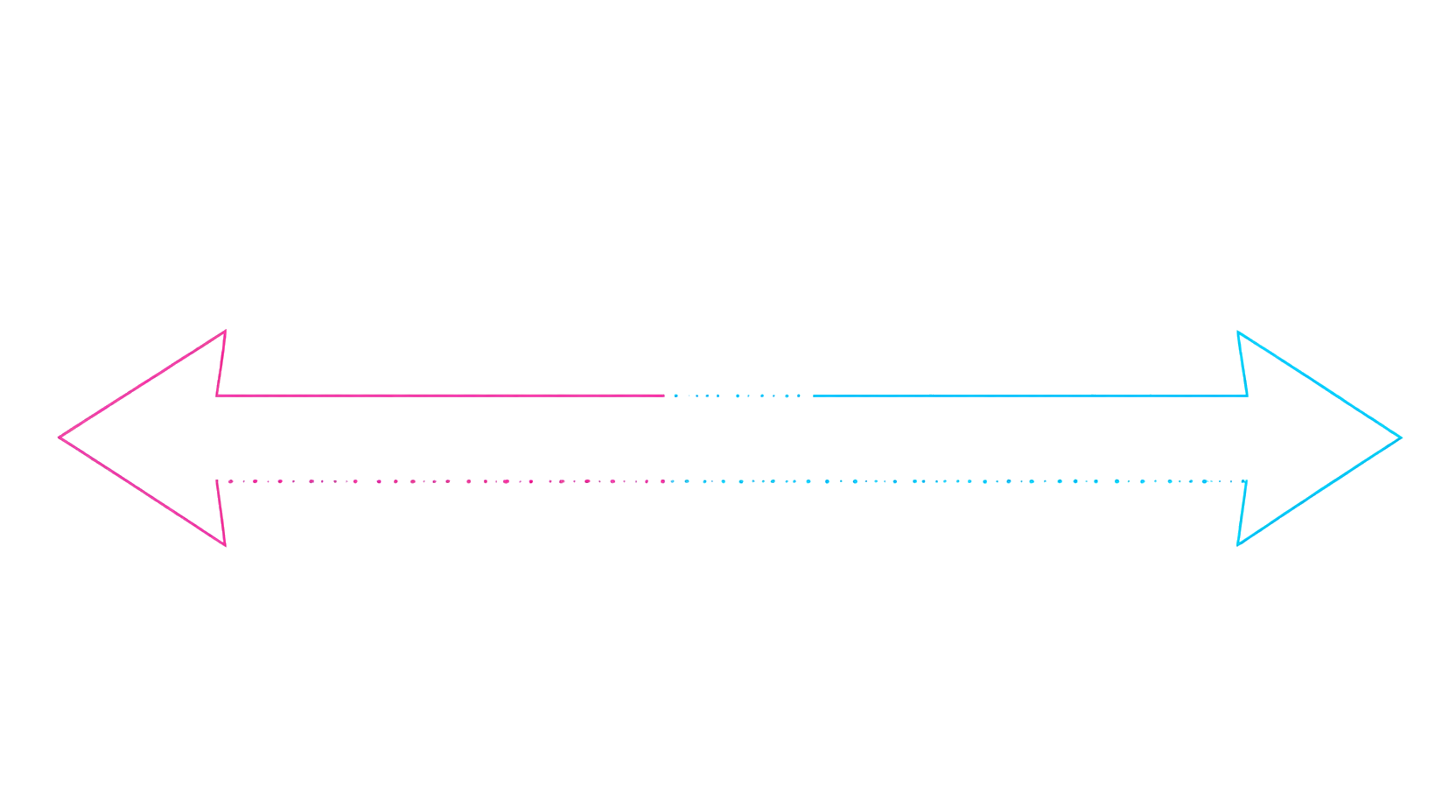
The model’s base equation is: 0 = 1 + (−1). The birth of reality is the spontaneous breaking of the original ideal symmetry of Zero, splitting into mutually inverse relations. In the absolute sum, the system always remains equal to Zero. No energy is created or destroyed — it is merely divided into mirror halves that still add up to zero.
This is not a metaphor. In real physics we observe direct confirmations of this principle:
-
Quantum vacuum fluctuations. In quantum field theory the vacuum is not emptiness but a state of minimum energy, in which virtual particle–antiparticle pairs are continuously born and annihilate. The vacuum literally “boils” with zero-point oscillations. Mathematically, each such pair sums to zero: the particle’s energy is compensated by the negative binding energy.
-
The zero total energy of the Universe. The work of Lawrence Krauss, Stephen Hawking, and Alan Guth indicates that the total energy of the Universe may be exactly zero. The positive energy of mass and radiation is perfectly compensated by the negative energy of the gravitational field. The Universe is a “free lunch”, as Guth put it.
-
Carlo Rovelli’s relational quantum mechanics. An object has properties (position, momentum, spin) only at the moment it interacts with another object. An isolated particle has no fixed attributes. Properties do not “belong” to a thing — they arise from relations. Remove all relations and nothing material remains.
-
John Wheeler’s “It from bit” principle. At the foundation of the physical world lies not matter but information. Information, by its nature, is an act of distinction (0 and 1, “yes” and “no”). Distinction itself is non-material: it has no mass, volume, or charge.
From this follows a radical ontological conclusion: the Universe is not “made of anything”. It is a pure logical act — a splitting of symmetry into mutually inverse relations. No “clay”, no “aether”, no “processor” running the simulation. There is only combinatorics — and it is free, like a mathematical theorem.
Metaphors and examples
The chess knight. The knight is not a piece of wood. Its essence is the rule of movement — that is, its relation to the other pieces and the squares of the board. Replace the wooden piece with a button — the knight does not change. It exists as a function within a system of relations, not as a material object. The same is true of the electron: it is not a “ball of charge” but a node where quantum relations intersect.
The meaning of a text. A book consists of paper and ink (matter). But the meaning of the text is immaterial. It arises only from the relations between letters and words. Rearrange the letters — the amount of ink does not change, but the information disappears. The Universe is structured more like meaning, not like ink.
The balance of a ledger. Debit and credit sum to zero. But as long as they are separated into different columns, a whole economy exists — transactions, movements, history. Remove the separation — and the book is empty. The Universe is a Zero temporarily “spread across columns”.
Key takeaways
- The Universe requires no substrate, no energy, no computer. Being is a pure logical possibility.
- Base equation: 0 = 1 + (−1). The birth of reality is a breaking of the symmetry of Zero.
- In the absolute sum, the system always equals Zero. No “created” energy exists.
- Properties of objects arise from relations rather than belonging to things in advance (Rovelli’s relational principle).
- Information is an act of distinction, non-material by nature (Wheeler, “It from bit”).
- The quantum vacuum and the zero energy of the Universe are direct physical confirmations of the model.