Afterword. The model’s passport
| Parameter | Value in the Theory of the Combinatorial Gap |
|---|---|
| Initial state | Mathematical Zero (0). No connections, no space, no time |
| Primary impulse | Spontaneous decay: 0 = 1 + (−1) |
| Substrate | None. The graph is non-material and free |
| Engine | Two rewriting rules: the Splitter (1 edge) and the Entangler (n edges, groups) |
| Matter | Topological defects of the graph, trapped asymmetry of connections |
| Time | An illusion of the directedness of temporal edges. No continuous flow exists |
| Space | An emergent property of the network of spatial edges |
| Black holes | Zones of extreme packing of defects, local overcoming of the gap |
| Finale | Combinatorial exhaustion, total entanglement, dissolution in the Zero |
| Cyclicity | A topological loop. Beginning = End. Isomorphism |
| Multiverse | An infinite number of combinatorial sets, existing simultaneously |
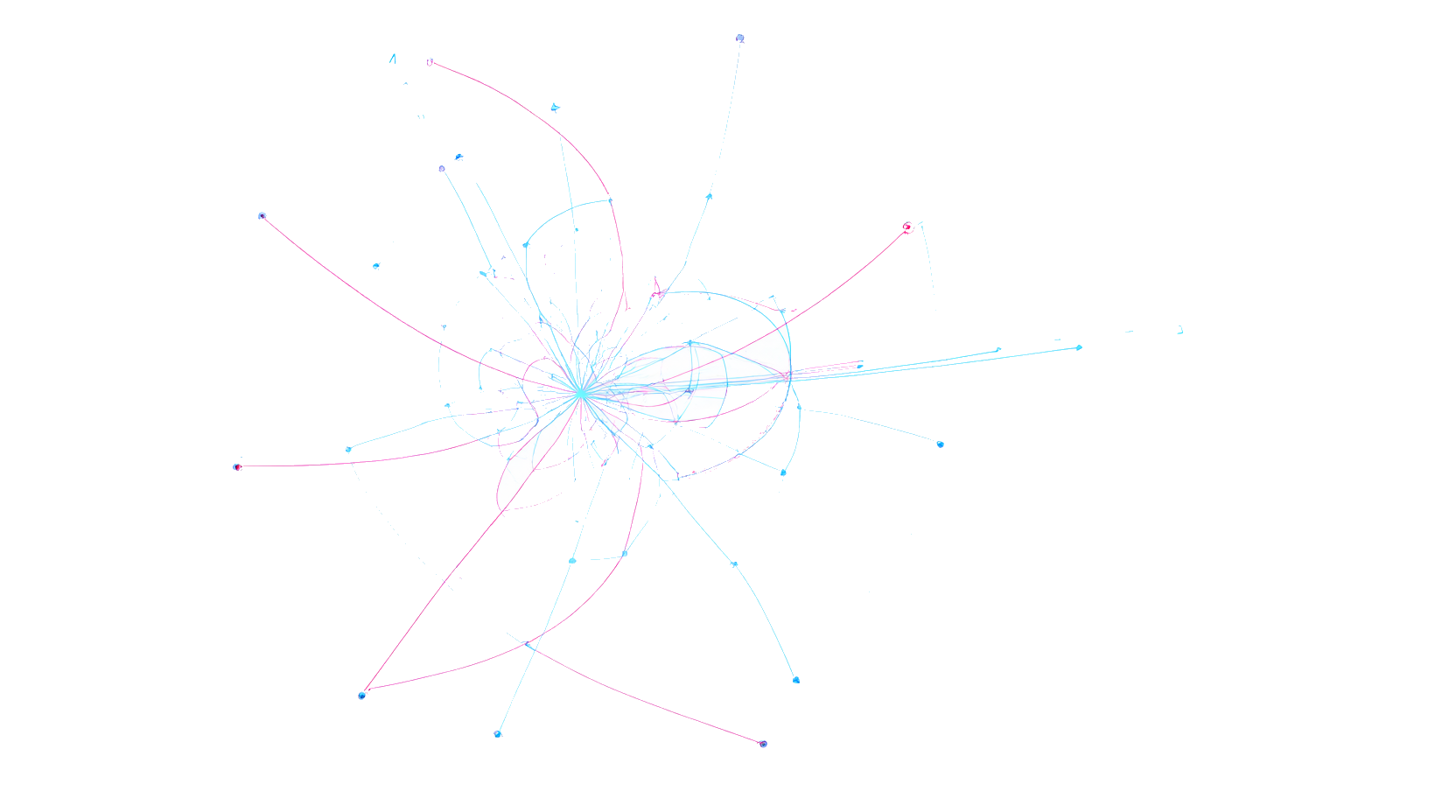
The Theory of the Combinatorial Gap is not physics in the standard sense. It is an ontology of pure logic in which the Universe is not “made of anything”, but is a free, non-material, self-consistent act of distinction. The Zero decays into opposites that scatter across the graph until the combinatorial gap closes and everything vanishes like fog. To then — simultaneously, eternally, isomorphically — vanish again.